
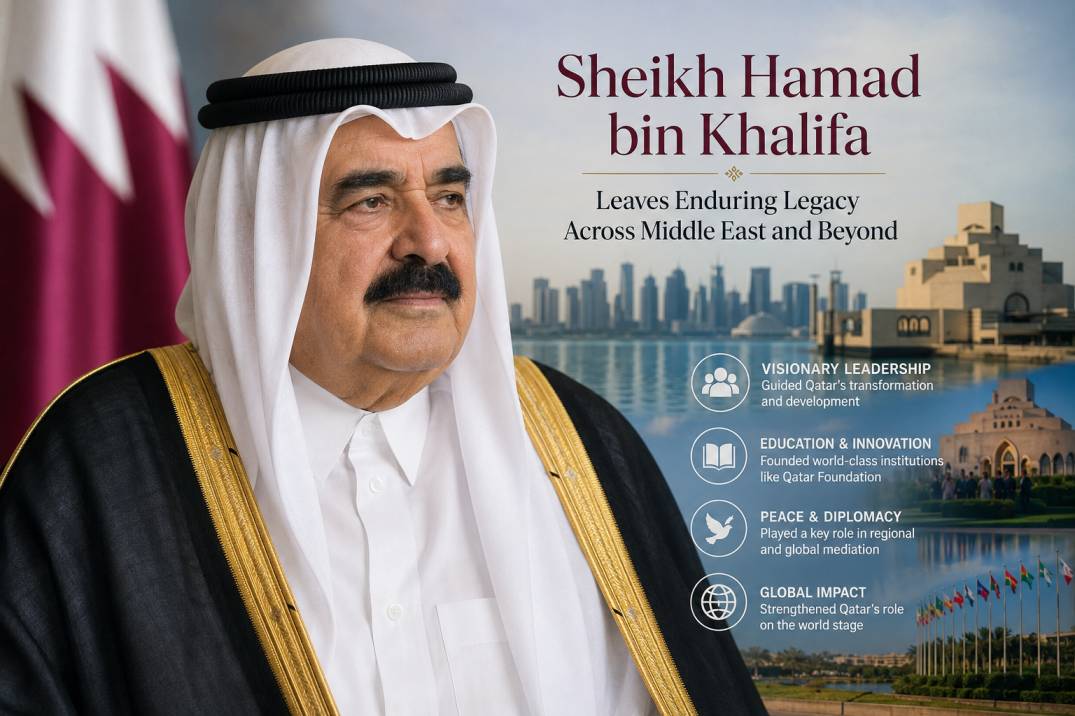
The recent passing of Sheikh Hamad bin Khalifa Al Thani signifies a pivotal moment in the history of the Arab world, as regional leaders and observers reflect on his influential legacy. Under his guidance, Qatar experienced a period of significant change, leveraging its natural gas reserves and making extensive investments in key sectors like education, healthcare, infrastructure, culture, sports, and diplomacy. The institutions established during his reign continue to influence Qatar’s development and have set a benchmark for progress throughout the region.
Sheikh Hamad was known for his leadership style that combined confidence with strategic foresight, focusing heavily on investing in human capital. This approach was evident in initiatives such as Education City, state-of-the-art healthcare facilities, research centers, and cultural institutions. The successful organization of the FIFA World Cup Qatar 2022 also highlighted his vision for modernization that respected national identity and cultural roots.
His influence went beyond national borders, as Sheikh Hamad’s efforts in fostering Arab cooperation and advancing humanitarian causes garnered praise from diplomats and analysts across the Middle East. His ability to position Qatar as a credible mediator in international disputes demonstrated a novel model of connecting economic growth with education, innovation, and open dialogue, reshaping global perceptions of a small state’s potential on the world stage.
The impact of Sheikh Hamad’s leadership continues to be felt through Qatar’s enduring institutions, its diplomatic ventures, and various humanitarian initiatives. These efforts have opened up new opportunities for future generations and left a lasting mark on both the Middle East and the international community.