
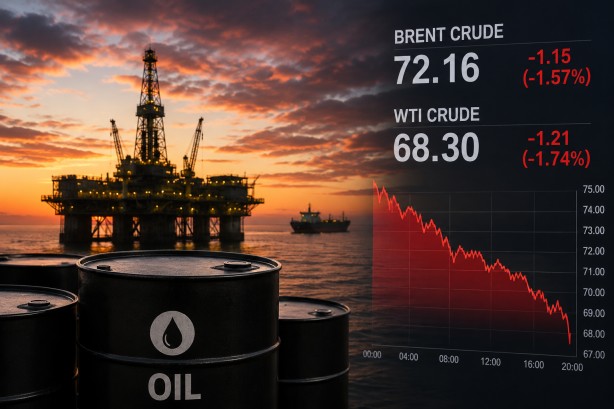
On Thursday, oil prices saw a modest decline as traders opted to secure profits while gauging the implications of renewed hostilities between the United States and Iran. Brent crude experienced a 0.52% drop, settling at $84.51 per barrel, while the US West Texas Intermediate crude slipped by 0.29% to $79.37 per barrel. Despite these decreases, both oil price benchmarks hovered near their highest levels in a month after initially extending their upward trend.
The fluctuating market sentiment is largely attributed to potential supply disruptions following recent US military actions targeting Iranian sites, alongside Iran’s threats to curtail energy exports in the region. This geopolitical tension has placed the Strait of Hormuz in the spotlight, a vital artery for global oil and liquefied natural gas trade. Reports indicate a dip in shipping activity through this strategic passage amid the latest conflict escalation.
Analysts highlight that while these geopolitical tensions are currently bolstering oil prices, the market is watchful of any significant disturbances in the energy supply chain. A particular concern is the security of the Bab el-Mandeb Strait, another critical channel for energy transit. There are apprehensions that regional allies might become embroiled in the conflict, further complicating the situation.
Market experts caution that should the tensions escalate, leading to continued export disruptions, oil prices might see further increases. Conversely, a de-escalation of the conflict could potentially drive prices down as the year progresses. The current climate of uncertainty continues to keep investors on edge, keenly observing developments that could sway the energy markets.